Why Are Air Dryers Used in Compressed Air Systems?
In compressed air systems, air compressors operate based on volume reduction, which inherently leads to an increase in pressure and temperature. As a result of compression, the moisture naturally present in ambient air undergoes condensation, converting from vapor into liquid water due to increased pressure and temperature.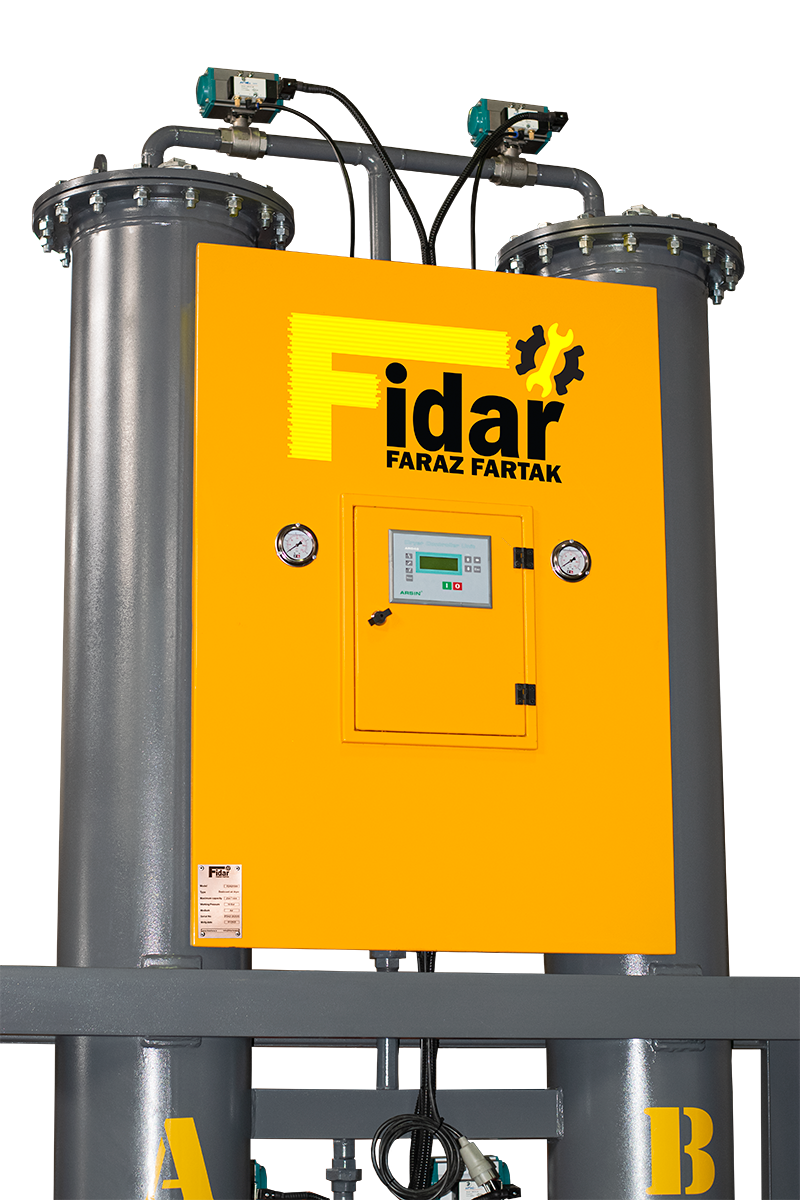
In screw compressors, where compression is assisted by oil injection, the compressed air is first directed to an oil separator and then to the aftercooler (compressor radiator) to reduce its temperature. At the normal operating temperature of screw compressors (approximately 55–70 °C), a portion of the condensed moisture is removed using water separators (moisture traps).
However, even after this stage, compressed air still contains a significant amount of residual moisture in vapor form. In many industries—such as paint and coating, resin production, food processing, pharmaceuticals, and applications involving pneumatic actuators—even trace amounts of moisture can lead to equipment failure, corrosion, product contamination, or spoilage.
To prevent these issues, air dryers are installed downstream of compressed air storage tanks. These dryers cool the air further and remove moisture more effectively:
-
Refrigerated dryers reduce moisture to a pressure dew point of approximately +3 °C
-
Desiccant dryers achieve pressure dew points of –20 °C, –40 °C, or –70 °C, depending on the application
Desiccant Air Dryer (Adsorption Dryer)
In the adsorption drying process, moisture is removed from compressed air using materials capable of absorbing water vapor—similar to the desiccants found in pharmaceutical packaging and industrial equipment. These materials can be regenerated and reused once saturated, either by heating or by purging with dry air.
Common desiccants include:
-
Silica Gel
-
Activated Alumina
These solid chemical materials, featuring a honeycomb-like porous structure, are packed into twin adsorption towers, creating a large surface area that allows moisture molecules to adhere effectively.
Differences Between Refrigerated and Desiccant Air Dryers
The operating principle of refrigerated air dryers is based on cooling and condensation of moisture using refrigerants such as R134a. In contrast, desiccant dryers remove moisture by adsorbing water vapor onto a desiccant bed.
Refrigerated dryers are limited in moisture removal capability due to their inability to operate below freezing temperatures. Desiccant dryers, however, can function well below the freezing point, making them suitable for cold climates and outdoor installations.
-
Refrigerated dryer dew point: +3 °C
-
Desiccant dryer dew point: –20 °C, –40 °C, or –70 °C
While refrigerated dryers produce partially dry air, desiccant dryers deliver highly dried air, up to 35 times drier than that produced by refrigerated systems.
Types of Desiccant Air Dryers
Desiccant dryers are manufactured in two main types:
-
Heatless (Non-Heated) Desiccant Dryers
Regeneration is performed using a portion of the dry compressed air produced by the dryer itself.
-
Heated Desiccant Dryers
Regeneration is achieved using heated air supplied by an electric heater, flowing counter-current to the drying airflow.
Key Features of Fidar Faraz Fartak Desiccant Dryers
-
Fully automatic and intelligent control from air intake to storage tank delivery
-
Easy replacement of desiccant material and refurbishment of tower linings during routine maintenance
-
Minimal environmental impact
-
Optional dew point meter for real-time dew point monitoring
-
Durable pneumatic valves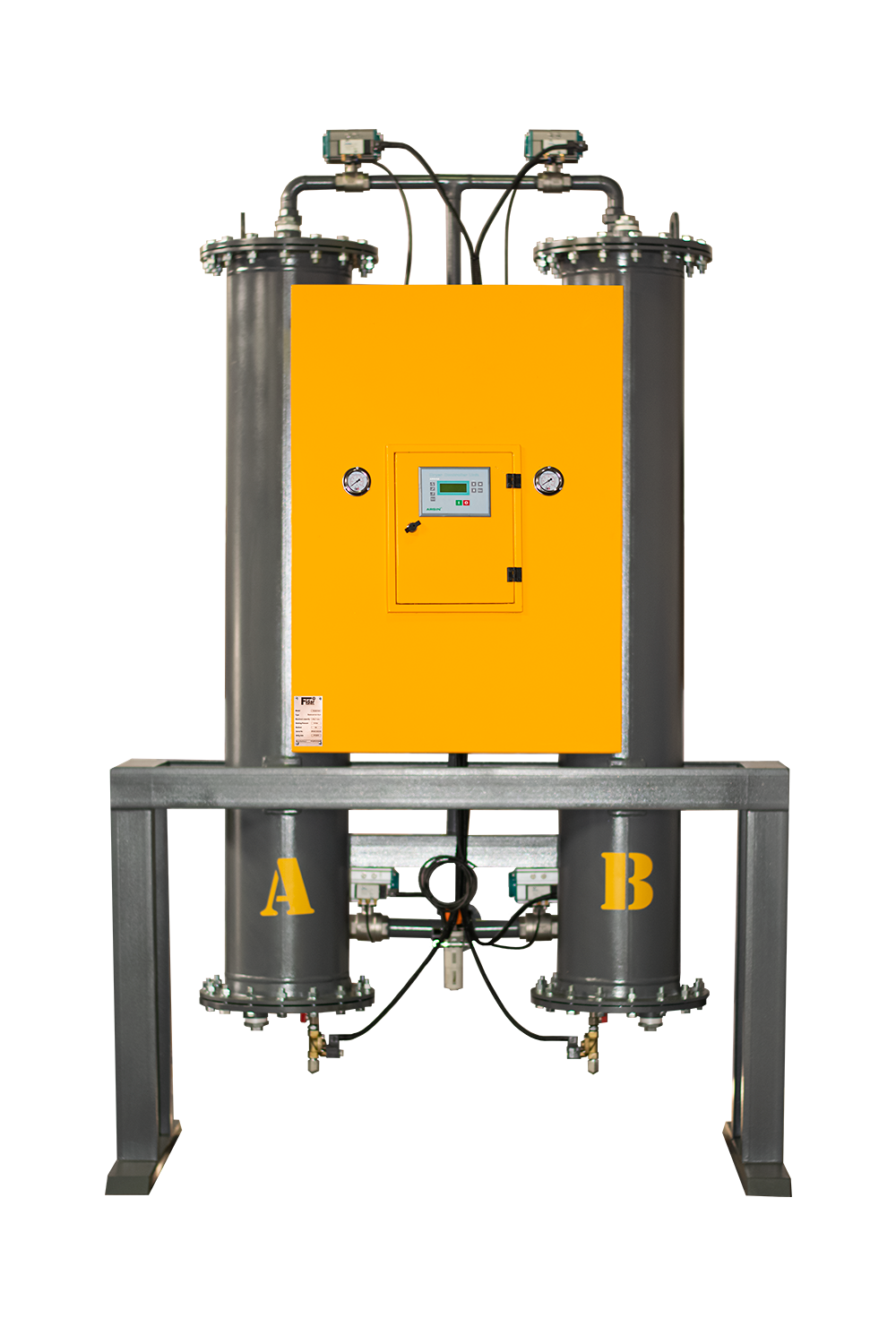
-
User-friendly operation
-
Designed for continuous 24/7 operation
Design and Manufacturing Capability
Fidar Faraz Fartak has the capability to design and manufacture desiccant air dryers with capacities ranging from 1 m³/min to 100 m³/min.
For Technical Consultation and Current Pricing
Please contact us through the following channels:
Phone: +982182802290
Email : info@fidarcompressor.com